Source pure copper 3 in 1 usb cable for phones, tablets, and laptops
Explore 30 listings for pure copper 3 in 1 usb cable options featuring retractable designs, USB 2.0 interfaces, and charging capabilities. Buyers can compare specifications like material composition, current ratings, and customization options from verified suppliers.
Key considerations
Products List






Comprehensive Sourcing Guide
Strategic Sourcing Guide for Pure Copper 3 in 1 USB Cables
Understanding the Core Product Architecture
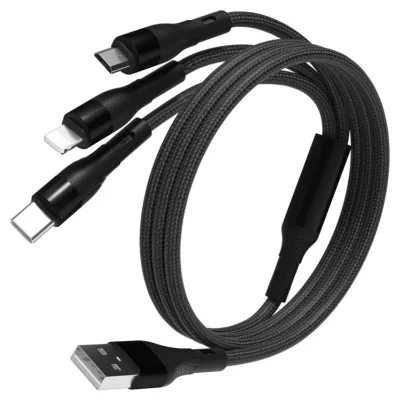
The "pure copper 3 in 1 USB cable" represents a specific segment of mobile connectivity hardware designed to consolidate charging and data transfer capabilities across multiple device interfaces into a single unit. In the context of B2B procurement, this product is defined by its multifunctional connector design, which typically integrates USB 2.0 connectivity with Micro-USB, Lightning, or Type-C interfaces to serve smartphones, tablets, and portable media players. The "3 in 1" designation indicates a single cable assembly that offers three distinct connector tips, allowing users to charge various devices without carrying multiple cables.
From a technical observation standpoint, the internal conductor material is a critical differentiator. Sourcing data indicates that high-performance variants utilize pure copper conductors, often specified with precise dimensions such as 0.08mm strands arranged in configurations like 0.08 * 55 * 2 or 0.08 * 10 * 3. This specific construction is chosen to minimize electrical resistance and ensure efficient power delivery, supporting current ratings that can range from 2.4A to 3.0A. The outer jacket materials vary, with common observations including Nylon, PVC, and TPE blends, sometimes reinforced with an ABS shell for durability. The interface standard is predominantly USB 2.0, which supports data transmission functions alongside the primary charging function.
Technical Specifications and Material Composition
When evaluating the technical specifications of these cables, buyers must look beyond the marketing term "pure copper" and verify the physical construction details. The conductor composition is paramount for signal integrity and heat management. Specifications found in the market include "Pure Copper" as the standard conductor material, with specific cross-sectional data points like "0.08 * 10 * 3" for data lines and "0.08 * 55 * 2" for power lines. These numerical values suggest a multi-strand design intended to maintain flexibility while ensuring low resistance.
The cable jacket and shell materials play a significant role in the product's longevity and tactile feel. Observed material combinations include ABS Shell with Nylon, Nylon with Aluminum, and PVC with Nylon. The inclusion of an aluminum component in some models suggests a focus on heat dissipation or structural rigidity, while the ABS shell provides impact resistance. The outer diameter (OD) is another critical dimension, with specific observations noting a 4.0mm thickness, which balances bulkiness with flexibility.
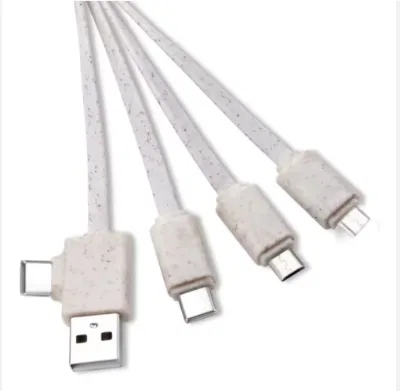
The connector design is equally vital. The "3 in 1" configuration often manifests as a 4-in-1 connector design in certain product lines, indicating a high degree of integration. The interface standard is consistently listed as USB 2.0, which dictates the maximum data transfer speeds. While some products feature retractable mechanisms to prevent connector damage, others are fixed-length cables with a standard line length of 1 meter. The presence of an IC chip in certain models is a notable technical feature, often used to regulate voltage and current for fast charging protocols, distinguishing these cables from basic passive wiring.
Compliance, Certification, and Safety Standards
In the global B2B market, compliance is a non-negotiable aspect of procurement. While specific certification statuses like ISO9001, BSCI, CE, and ROHS are often cited in the broader industry, buyers must treat these as verification targets rather than guaranteed attributes of every listed product. The procurement process requires confirming that the supplier can provide valid documentation for these standards.
For the "pure copper 3 in 1 USB cable," the primary safety and environmental concerns revolve around the materials used in the jacket and the electrical safety of the conductors. The use of pure copper is generally preferred for its conductivity, but the surrounding insulation materials (PVC, Nylon, TPE) must meet flammability and toxicity standards. Buyers should explicitly request proof of compliance with ROHS (Restriction of Hazardous Substances) to ensure the absence of lead, mercury, and other restricted materials. Similarly, CE marking indicates conformity with health, safety, and environmental protection standards for products sold within the European Economic Area.
Quality assurance is often embedded in the production process. Some suppliers claim "100% Professional QC Passed" as a standard practice, but this is an internal claim that requires external validation. The "Mobile/Computer/Keyboard/MP3/MP4 Player/Printer" standard listed in product attributes suggests the cable is tested for compatibility across a wide range of devices. However, buyers should not assume universal compatibility without specific testing data for their target markets. The presence of a "private mold" indicates that the supplier may have proprietary designs, which can be advantageous for branding but requires careful review of intellectual property rights.
Cost Drivers and Pricing Dynamics
The pricing of pure copper 3 in 1 USB cables is influenced by several tangible factors, primarily the cost of raw materials and the complexity of the manufacturing process. The use of pure copper is a significant cost driver, as copper prices fluctuate based on global commodity markets. Cables with higher copper strand counts or thicker gauges will inherently cost more than those with minimal conductor usage. Additionally, the inclusion of an IC chip adds to the component cost, particularly if the chip supports specific fast-charging protocols.
Material selection for the cable jacket also impacts the final price. Nylon and TPE are generally more expensive than standard PVC due to their superior durability, flexibility, and resistance to environmental factors. The "ABS Shell+Nylon" or "Nylon+Aluminum" combinations observed in the market represent premium material choices that justify higher price points compared to basic PVC-only constructions.
Minimum Order Quantity (MOQ) is another critical variable in cost dynamics. The observed MOQ range for these products spans from 3 to 2000 units. Lower MOQs, such as 3 units, are typically available for sample orders or highly customized runs but come with a higher per-unit cost. Higher volume orders allow for economies of scale, reducing the unit price. The packaging method, ranging from simple polybags to color boxes or fully customized packaging, also adds to the cost. Customized packaging, which includes branding and specific design elements, incurs additional tooling and labor expenses.
Typical Applications and Market Use Cases
The versatility of the pure copper 3 in 1 USB cable makes it suitable for a diverse range of applications. The primary use case is mobile device charging and data synchronization for smartphones, tablets, and portable media players. The "3 in 1" design is particularly valuable for users who own multiple devices with different charging ports, such as a mix of Android and iOS devices, or for travelers who need a single solution for various gadgets.
In the B2B sector, these cables are frequently utilized as promotional items, corporate gifts, or bundled accessories with electronic devices. The ability to accept customer logos and customized packaging makes them ideal for branding campaigns. The "Customer Logo Accepted" attribute highlights their suitability for corporate gifting, where the cable serves as a functional brand ambassador.
The "Mobile/Computer/Keyboard/MP3/MP4 Player/Printer" standard suggests that these cables are also used in office and educational environments where a variety of peripherals need to be connected. The data transmission function ensures that files can be transferred between devices, making them essential for productivity. The "Multi-Function Charging" and "Multi-Transfer Data" advantages position these cables as comprehensive solutions for modern digital lifestyles, reducing cable clutter and improving user convenience.
Supplier Evaluation and Quality Control Protocols
Selecting the right supplier requires a rigorous evaluation process that goes beyond surface-level product descriptions. Buyers should prioritize suppliers who demonstrate transparency in their manufacturing processes and material sourcing. The observation that the product origin is "China," specifically "Guangdong, China," indicates a concentration of manufacturing capability in this region. However, buyers must verify the specific factory capabilities and quality control measures in place.
Quality control should be a central part of the supplier evaluation. Claims of "100% Professional QC Passed" should be backed by documented procedures, such as incoming material inspection, in-process testing, and final product testing. Buyers should request samples to physically inspect the cable construction, checking for the integrity of the pure copper conductors, the flexibility of the jacket, and the durability of the connectors. The presence of an IC chip should be verified to ensure it functions correctly and does not cause overheating or device damage.
Supplier reliability is also determined by their ability to meet lead times and handle customization requests. The "Customization: Available" and "Customized: Customized" attributes indicate flexibility, but buyers must confirm the lead times associated with these custom orders. The "Private mold: Yes" attribute suggests that the supplier has the capacity for unique designs, but this requires a longer development cycle and potentially higher upfront costs. Buyers should assess the supplier's track record for delivering on time and maintaining consistent quality across batches.
Long-Term Procurement Considerations
Sourcing pure copper 3 in 1 USB cables is not just a one-time transaction but a strategic decision that impacts long-term supply chain stability. Buyers should consider the scalability of the supplier's production capacity. As demand grows, the supplier must be able to increase output without compromising quality. The observed MOQ range of 3 to 2000 units suggests that suppliers can accommodate both small and large orders, but buyers should negotiate terms that allow for flexible scaling.
Sustainability is becoming an increasingly important factor in procurement. The choice of materials, such as Nylon and TPE, can have environmental implications. Buyers should inquire about the recyclability of the materials and the supplier's commitment to sustainable manufacturing practices. The "ROHS" compliance mentioned earlier is a baseline, but buyers may also look for suppliers who adhere to broader environmental standards.
Finally, the long-term relationship with the supplier should be built on clear communication and mutual trust. The ability to customize the product, including the logo and packaging, allows for brand differentiation. However, buyers must ensure that the customization process is efficient and that the supplier can maintain the quality of the core product while adding these value-added features. By focusing on these long-term considerations, buyers can secure a reliable supply of high-quality pure copper 3 in 1 USB cables that meet their specific business needs.
Comparative Analysis of Product Variants
To assist buyers in making informed decisions, the following table compares key attributes of the observed product variants. This comparison highlights the differences in materials, specifications, and features that influence procurement choices.
| Attribute | Variant A (GT-UC-24) | Variant B (GT-UC-13) | Variant C (CD-OE-001) |
|---|---|---|---|
| Material | ABS Shell + Nylon | Nylon + Aluminum | PVC, Nylon |
| Cable Jacket | Pure Copper + ABS Shell | Pure Copper + TPE | PVC |
| Connector Design | 4 in 1 connector | USB 2.0 Connector | 3 in 1 USB cable |
| Interface | USB 2.0 | USB 2.0 Connector | USB 2.0 |
| Function | Charging/Data Transfer | Charging/data transmission | 3A Fast Charging |
| Current Rating | Not specified | Not specified | 2.4A ~ 3.0A |
| Retractable | Retractable | Not Scalable | Not specified |
| IC Chip | With IC Chip | Not specified | Not specified |
| Packing | Polybag / Color Box / Customized | Polybag / Paper Box / Customized | Single item |
| Origin | China | Guangdong, China | China |
This table illustrates that while all variants share the core "pure copper" and "USB 2.0" characteristics, they differ significantly in material composition and specific features. Variant A offers a retractable design with an IC chip, suitable for users prioritizing portability and fast charging. Variant B features an aluminum jacket, which may offer better heat dissipation, while Variant C focuses on a 3A fast charging capability with a standard PVC jacket. Buyers should select the variant that best aligns with their specific application requirements and target market expectations.
FAQs
What materials are used for the cable jacket?
The cable jacket typically combines pure copper conductors with materials like ABS shell, nylon, PVC, or TPE. Some models feature an aluminum component for heat dissipation, while others use a pure copper and ABS shell construction for durability.
Which connector types are supported by this cable?
This cable supports a 3-in-1 or 4-in-1 connector design, often including USB 2.0, Micro-USB, and other interfaces. It is designed to function with mobile phones, computers, keyboards, MP3 players, and printers according to the product standard.
Can the cable support fast charging capabilities?
Yes, the cable supports fast charging with current ratings ranging from 2.4A to 3.0A. Some models include an IC chip to regulate voltage, ensuring efficient power delivery for devices requiring 3A fast charging functions.
What is the minimum order quantity for this product?
The minimum order quantity ranges from 3 to 2000 units depending on the supplier and customization level. Lower MOQs are often available for samples, while higher volumes allow for better pricing and economies of scale.
Is customization available for branding and packaging?
Customization is available for logos, packaging, and specific product models. Buyers can request customer logos, color box packaging, or polybag options, and some suppliers offer private molds for unique designs.
Where are these cables typically manufactured?
These cables are manufactured in China, with specific origins noted in Guangdong. The production location is a key factor for logistics and lead time planning when sourcing from suppliers in this region.